
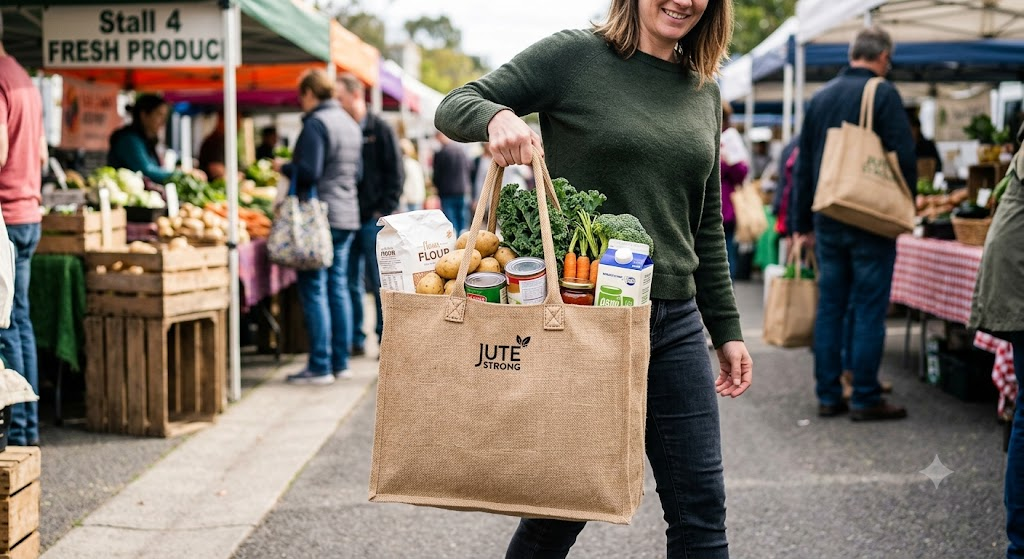
Anyone who's had a cheap plastic bag snap open mid-walk from the car to the kitchen knows the frustration all too well. It's exactly why more households and businesses across the city are switching to something far more dependable. For shoppers and retailers searching for sturdy jute Bags in Hyderabad or looking to partner with trusted jute bags manufacturers in Secunderabad, the appeal isn't just about sustainability — it's about raw, practical strength.
Jute has quietly earned a reputation as one of the toughest natural fibers on earth. Here's the science and the substance behind why it outperforms plastic, paper, and even many synthetic alternatives when it comes to heavy-duty use.
What Makes Jute Fiber So Strong?
Jute isn't just "eco-friendly packaging" — it's a genuinely high-tensile natural fiber with properties that make it ideal for load-bearing applications.
- High tensile strength: Jute fibers have one of the highest tensile strengths among natural fibers, meaning they resist breaking under pulling force — exactly what's needed when a bag is loaded with weight.
- Dense fiber structure: The plant's long, coarse fibers are tightly bound together, creating a fabric that resists tearing even under repeated stress.
- Low elasticity, high stability: Unlike stretchy synthetic materials that deform and weaken over time, jute holds its shape and structural integrity, even after multiple uses.
- Natural moisture resistance: Jute fibers handle humidity and minor moisture exposure better than paper, without disintegrating.
This combination is why jute has been used for centuries in sacks, ropes, and heavy-duty packaging — it's not a modern trend, it's a proven material.
Jute vs. Plastic vs. Paper: A Strength Comparison
| Feature | Jute Bags | Plastic Bags | Paper Bags |
|---|---|---|---|
| Load capacity | High (10+ kg easily) | Moderate, prone to tearing | Low to moderate |
| Reusability | Hundreds of uses | Single or limited use | Very limited, weakens when wet |
| Moisture resistance | Good | High but non-biodegradable | Poor |
| Tear resistance | Excellent | Poor under stress | Poor |
| Environmental impact | Biodegradable, low footprint | Major pollutant | Biodegradable but resource-heavy |
For grocery runs, retail packaging, or bulk transport, jute consistently outperforms both plastic and paper on durability alone — sustainability is simply the added bonus.
Why Jute Is Ideal for Grocery and Retail Use
Grocery bags face a specific set of demands: sudden weight loads, sharp edges from packaged goods, repeated stretching, and frequent handling. Jute is engineered by nature to handle exactly this kind of stress.
- Handles uneven weight distribution: Bottles, canned goods, and produce shift around, but jute's woven structure distributes stress evenly across the fabric instead of concentrating it at weak points.
- Resists puncture from sharp packaging: Unlike thin plastic, jute's thick weave doesn't tear easily when in contact with boxes, cans, or glass jars.
- Long handle life: Reinforced jute handles are less likely to snap under weight compared to thin plastic loops or flimsy paper handles.
- Performs well in bulk retail settings: Supermarkets, wholesale stores, and event vendors benefit from jute's ability to be reused hundreds of times without structural failure.
This is precisely why retailers sourcing jute Bags in Hyderabad increasingly prefer them for grocery and carry-bag applications — the material simply lasts longer under real-world conditions.
Beyond Groceries: Where Else Jute's Strength Pays Off
Jute's durability isn't limited to grocery shopping. Its load-bearing capabilities make it a smart choice across several other applications:
- Retail and gift packaging that needs to survive transit without tearing
- Promotional and event bags handed out in bulk that still need to hold up to real use
- Wholesale and bulk transport bags for markets and small businesses
- Everyday reusable totes for books, gym gear, or daily errands
Because jute performs reliably across such a wide range of uses, businesses often standardize on it as their primary packaging material rather than switching between materials for different needs.
Choosing the Right Jute Manufacturer for Strength and Consistency
Not all jute bags are created equal — the strength of the final product depends heavily on fiber quality, weaving technique, and stitching reinforcement. When selecting a manufacturer, look for:
- Consistent fiber grading, ensuring every batch meets the same strength standards
- Reinforced stitching at stress points, particularly handles and base seams
- Proper weave density, which directly affects tear resistance and load capacity
- Proven bulk production experience, especially for retailers needing consistent quality across large orders
This is where working with established jute bags manufacturers in Secunderabad makes a measurable difference — proximity to raw jute sourcing and skilled weaving expertise translates directly into stronger, more reliable finished bags.
The Jute Bag Maker (jutebagmaker.in) focuses specifically on this — combining quality-graded jute fiber with reinforced construction to produce bags built for genuine heavy-duty use, not just aesthetic appeal. For businesses that need packaging capable of carrying real weight, day after day, that structural reliability matters as much as the sustainability story.
Key Takeaways
- Jute's natural fiber structure gives it exceptional tensile strength and tear resistance compared to plastic and paper.
- It handles uneven weight, sharp packaging, and repeated use far better than most alternatives.
- Strength varies by manufacturer — fiber quality, weave density, and stitching all matter.
- Local sourcing from Hyderabad and Secunderabad manufacturers ensures consistent quality and faster turnaround for bulk orders.